Skip to Content

Edapho's Origin

Edapho began with a failure.

Before Edapho existed, Erik Fritz founded Flora Vida Flower Farm, a regenerative cut flower operation. The goal was simple: grow high-quality flowers using regenerative principles. In practice, the land did not cooperate. Plants struggled to establish, yields were inconsistent, and the system refused to stabilize.

Erik pursued every available solution. He worked with agricultural extension offices, consultants, producers, and specialists. Each offered a different answer. Some interventions helped temporarily. Many made conditions worse. All were presented as complete solutions. None addressed the whole problem.

Faced with a failing farm and no coherent explanation, Erik stepped away from prescriptions and began asking a different question: why was the soil behaving this way?

brown open field during daytime

"If humans caused the damage, then by Occam’s Razor, it must be our responsibility to repair it. Nature cannot heal what it did not harm."

Edapho Co-Founder Erik Fritz
Erik Fritz
Company Director

The Turning Point

Over six years, Erik conducted an intensive research and development effort spanning soil chemistry, biology, structure, hydrology, and system dynamics. What emerged was a clear pattern. The issue was not a lack of good practices. It was fragmentation.

Every “solution” addressed one dimension of soil function while ignoring others. Some improved chemistry while suppressing biology. Others promoted biological activity without resolving physical constraints. Many assumed structure would self-correct.

The soil system could not recover because it was being treated as parts instead of a whole.

When Erik shifted to diagnosing soil behavior as an integrated system, the results changed. By identifying the true drivers of limitation and sequencing interventions accordingly, soil function recovered faster and with fewer inputs than anything he had tried before.

Soil Function Pyramid

From Farm to Framework

The insights developed at Flora Vida extended far beyond flower production. The same soil failures appeared in agriculture, construction sites, campuses, infrastructure corridors, and public land. The consequences changed, but the root causes did not. Edapho was formed to formalize this work.

Building on years of field experience, Erik developed a proprietary integration network, Edaphodynamics, that links soil behavior, risk drivers, and system outcomes. This approach does not rely on single practices or ideologies. It identifies constraints, resolves them in the correct order, and designs for stability over time.

What began as a failed flower farm became a systems discipline.

How We Work   About Edaphodynamics

Discover our founders

Together, they bridge deep systems thinking with real-world application.
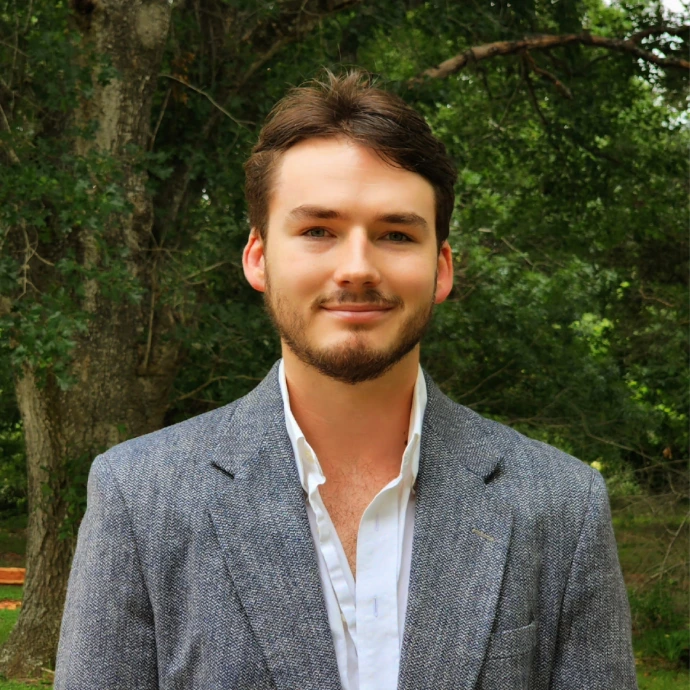
Erik Fritz, Company Director

Erik leads Edapho’s scientific direction and systems framework. His work focuses on soil behavior, constraint diagnosis, and translating complex system dynamics into actionable decisions.

Edapho Co-Founder Alexis Ellard

Alexis Ellgard, Strategic Growth Director

Alexis leads strategy, translation, and engagement. She ensures Edapho’s work moves effectively through institutions, communities, and capital systems without losing technical integrity.

Next Steps

If soil function is limiting your project or community, the first step is understanding why.